During a stop in Cairo, Ohio tonight, I came across a van with 10 Franciscan University of Steubenville students. While other students were heading to, say, the beaches of Florida for Spring Break, they were headed to a church in South Bend, Indiana to put on a retreat. How refreshing is that! I passed on some campaign cards to them, told them the platform aligns with Catholic Church teaching, and asked them to spread the word. They seemed jazzed. [The country would be such a tremendously better place if we had more young adults like this, huh.]
As the coronavirus spreads, things are, in essence, globally deconstructing. And we can go with this to realign the world in the right way. Or not. Example: The “global supply chain” is being disrupted. International trade supply transport pumps billions of tons of carbon dioxide into the atmosphere every year, allows for sweatshops in the Third World devoid of any “human dignity,” and the massive amount of cheap consumer products leads to gluttony (a major sin) in the First World. We would do well to return to a paradigm that is primarily about balanced “local production for local consumption” in all the countries — with stepped up aid to Third World countries to help them become as sustainable as possible with the same paradigm in their countries. For more on this realigned economy, see our Economic position paper… For more on how to get more help to the Third World to help them become much more sustainable, see our Foreign Affairs position paper.
I just sat in on a school talk by the Coordinator of the D.A.R.E. Program in our county for a newspaper article. His topic was: “Bullying.” He told the youth there are four forms of bullying: verbal, physical, social and cyber. He then described the anxiety, stress, depression… this creates in the one being bullied. He also said this doesn’t happen in a vacuum. That is, often (but not always) the bully comes from a home where he/she is neglected or abused. In turn, they then pick out someone who appears to be weaker, in order to unconsciously take out their anger about the home situation. [Also, as we’ve seen in recent years, sometimes the one being bullied then snaps, picks up a gun, and…] I have traveled the country extensively looking at peer mediation programs, conflict resolution programs… in schools. What’s more, I’ve crafted a comprehensive position on how to “heal the family” in general in America. Broken, dysfunctional families are the systemic roots of a tremendous amount of our societal problems in general. And these days there are a lot of broken, dysfunctional families.
I just interviewed someone who taught in both the Law and Pharmacy schools at Ohio Northern University. Fascinating combination, and it gives him quite a unique perspective. He said in this politically charged climate that there is a tendency to make a scapegoat of “Big Pharmacy” altogether, which he believes is wrong. He said that, for one, research and development in the pharmaceutical industry is expensive and those costs need to be defrayed. Secondly, he said that over government regulation of the industry is causing higher prices as well. Conversely, he said in a “free enterprise system” there are often adjustments built in to help those less well off. For instance, he pointed to Prescription Drug Plans in both Medicare and Medicaid. And he said that many of the big drug companies have sliding fee scales people can apply for if they are struggling to pay for a particular prescription. In addition, in Monroe, Louisiana, we researched a “Community Pharmacy” that was run by the St. Vincent De Paul Society. Community members donated money to it, nursing homes provided left over medication after someone, say, died, others donated over-the-counter medication… There’s no reason the latter couldn’t work in every county in the country. For more on our Healthcare Plan, which is somewhat creatively outside -the-lines, see…
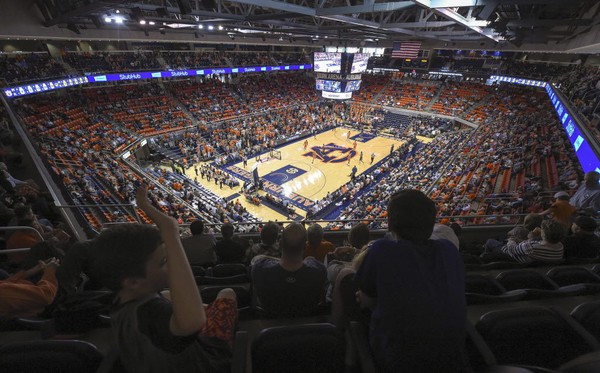
While the Democratic presidential candidates are crisscrossing Nevada, with frequent stops in Las Vegas, I decided to “try my luck” (pun intended) stumping at a diner in downtown Delphos, Ohio. If I don’t carry Delphos, I’ll be surprised. [Delphos was also the location of my kid’s last regular season basketball game.] I often combine these types of trips in order to save on money, to cut down on the emission of more carbon dioxide, and so on. For scenes from another diner stumping, see…
Yesterday marked another yearly anniversary of House Bill 9066 that set up Japanese internment during World War II. Some 100,000 Japanese Americans were interred in barracks behind barbed wire fences. In retrospect, history has proved this wrong. But is it over? Immigrants are ‘interred’ in cages at our Southern border. Scores of kids are “interred” in gang war zones in our inner cities. And on, and on… Problem here is, those contributing to this actively, or through indifference, may well find themselves ‘interred’ in an even worse place in the afterlife.
Trump went to the Daytona 500 as the official race starter yesterday. As president, I wouldn’t do that. In fact, I’d try to dissuade motor car racing altogether. Ryan Newman is in serious condition after this crash (NBC News photo above) — 19 years to the day after a Dale Earnhardt Sr. crash, also on the last lap here, killed him. Earnhardt had a family. Newman has a wife and two children. These drivers, at these high speeds, spin around a track — metaphorically (and literally) similar to spinning the gun chamber in a Russian Roulette game. And we all, the fans, are voyeurs fueling (tragic pun intended) it all. It’s suicide, not sport. And for what redeeming reason(s)? Testing, say, oil viscosity at 210 mph? How ridiculous. And how sinful.
Instead of going to Air Force One last weekend for a luxury trip to Mar-a-Lago, I went to Table One in hardscrabble Kenton, Ohio, on the way to see my kid’s basketball game. Table One is owned and run by Christian volunteers. There’s no prices on the menu. If you get a burger, and you’re more well off financially, you “donate,” say, a bit more for the burger. Reciprocally, if someone is less well off, they will pay less (or even eat for free). It’s, in essence, a “Pay It Forward” establishment, with a Christian ethos of “sharing.” Our position paper on “the economy” spins around this type of ethos. See…
I’m doing a story on these guys for our local paper. A couple years ago, I did another story on another semi-pro football team out of Findlay, Ohio, as well. What’s more, they let me play quarterback during practice for several plays — with some contact. That’s right, while there’s questions about how physically fit some of the other presidential candidates are, I’m taking some knocks with a semi-pro football team.
In my spiritual reading this morning, I came across the “Tower of Babel” story in the Old Testament. It seems God had told “man” to go to the ends of the earth, or at least to Des Moines, and “populate” the whole thing. Instead, many of them congregated in this one place and started building a city that would “…reach to the heavens,” so, apparently, they could be god-like. Or something like that. God, the real God, said: bad idea, scrambled their one common language, and people of like languages were then forced to disperse to other places around the globe. Fast forward to today… Man, through advanced technology, has developed a common language (computer language). What’s more, there is computer software now that instantly translates any spoken language. It’s name: “Babel.” Fascinating, huh. In essence, we’re doing it again. Rapid advancement in technology, in science, in architecture (Skyscrapers stretching into the heavens?) are making “man” perceive himself/herself as “god-like.” And the more “god-like” one seems to become, well, the less of a seeming need for reliance on the real God, right. Note: We need to be doing all this in a measured, prayerful fashion — instead of going at it in breakneck speed.